1 Big Idea
Here’s the uncomfortable truth: most people spend years drinking wine without ever asking what they actually like—and why.
They chase scores. They defer to sommeliers. They buy what’s on sale and hope for the best. When something lands, they can’t repeat it. When something misses, they blame themselves. Sound familiar?
But here’s what took me years to understand: preferences aren’t random. They’re structural. You’re not drawn to a wine because of its label, its vintage, or its region. You’re responding to specific, measurable characteristics: its acidity, its tannin grip, its weight on your palate, its sweetness or lack thereof.
These are levers. And once you isolate which levers matter most to you, everything changes.
You stop defaulting to “I’ll know it when I taste it” and start asking better questions at the wine shop: Is this high-acid? Is the tannin soft or grippy? Is there residual sugar?
This issue gives you a simple diagnostic: three wines, three structural contrasts, one clear readout of your palate priorities. Do the work once. Shop smarter forever.
3 Taste Experiments
#1: The Acidity Test
Objective: Discover whether you crave or avoid high-acid wines.
How: Buy one Sauvignon Blanc (Marlborough, New Zealand—look for bright, citrus-driven descriptors) and one oaked Chardonnay (California—rounder, buttery). Both should be $12–20. Chill both to the same temperature. Taste side-by-side. No food.
What to Notice:
- Which makes your mouth water more?
- Which feels “refreshing” vs. “smooth”?
- If you keep reaching for the Sauv Blanc, you likely value acidity. If the Chardonnay feels more satisfying and complete, you may prefer lower-acid, richer wines.
#2: The Tannin Test
Objective: Find your tannin tolerance.
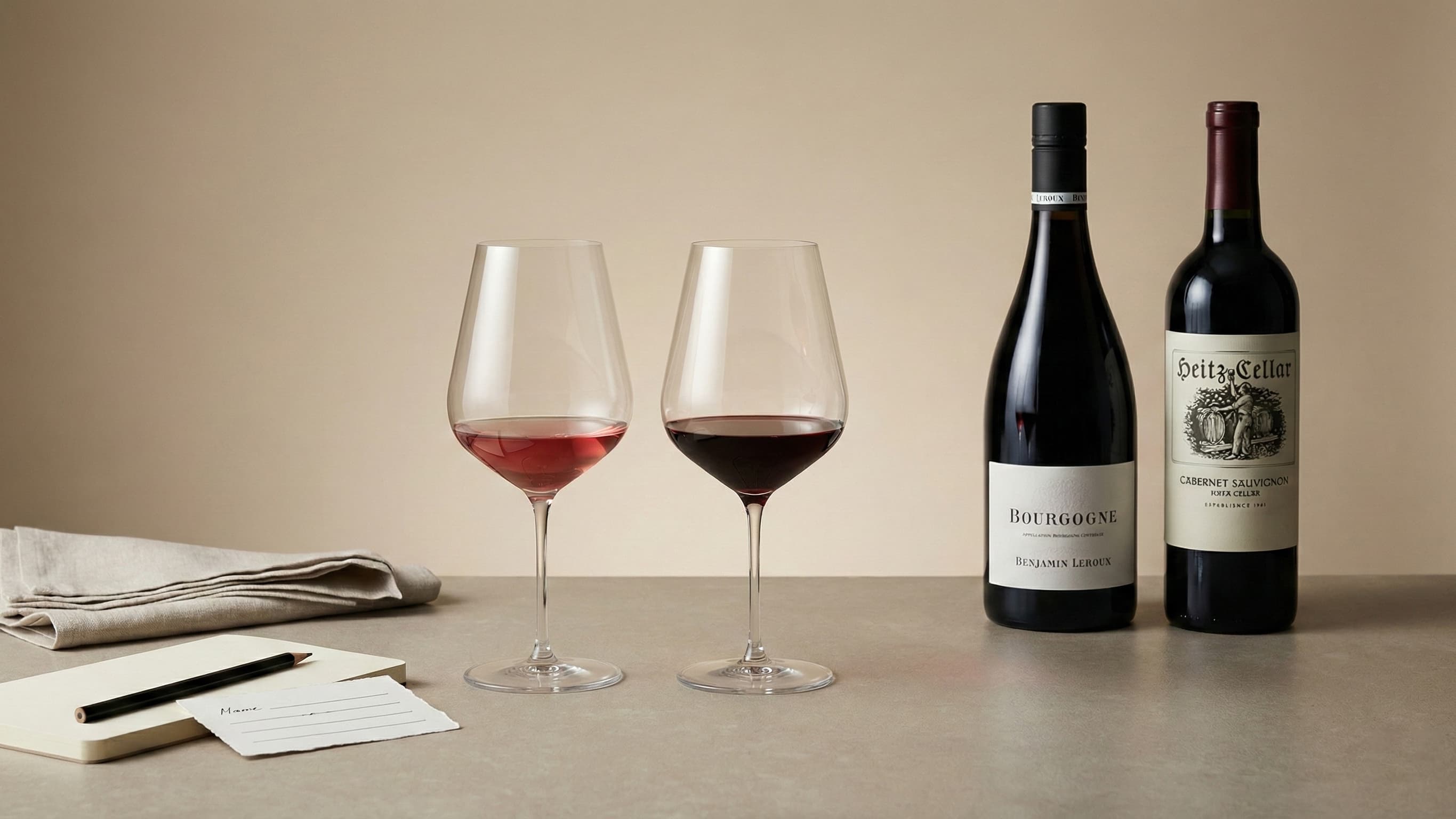
How: Buy one Pinot Noir (Oregon or Burgundy—silky, low tannin) and one Cabernet Sauvignon (Napa or Paso Robles—firm, structured). Both around $15–25. Taste side-by-side at cool room temperature (65–68°F).
What to Notice:
- Does the Cab feel drying or gripping on your gums and inner cheeks?
- Does that sensation bother you, or does it feel satisfying—like structure holding the wine together?
- If the Pinot feels “thin” and you crave more grip, you value tannin structure. If the Cab feels harsh or overwhelming, you prefer softer, silkier wines.
#3: The Sweetness Test
Objective: Clarify your sweetness threshold.
How: Buy one dry Riesling (Alsace or German Trocken—bone dry) and one off-dry Riesling (German Kabinett or Spätlese—touch of sweetness). Both under $30. Taste well-chilled, side-by-side.
What to Notice:
- Does the off-dry version taste balanced and fruity, or cloying and obvious?
- Does the dry version taste “clean” and precise, or “sharp” and austere?
- Your reaction here reveals whether residual sugar is a feature you enjoy or a flaw you avoid.
1 Question for You
After all three tests, fill in the blanks:
I prefer ______ acidity (high / low).I prefer ______ tannin (grippy / soft).I prefer ______ sweetness (bone-dry / touch of sweet).
That’s your structural fingerprint. Write it down. Memorize it. Next time you’re at a wine shop, tell them exactly that. Watch how much faster you find wines you love.