1 Big Idea
Most wine education starts with information: regions, grapes, vintages. Memorize enough facts and eventually you’ll develop taste.
The logic sounds reasonable—until you try it.
Teaching wine this way is like teaching music theory to someone who’s never heard a song. The knowledge has nowhere to land.
Real discernment develops through a specific sequence: perception first, then knowledge.
I call it The Resonance Method. Five stages that build on each other:
- Stage 1: Exposure to Range — Taste widely to see the full spectrum
- Stage 2: Notice Resonance — Pay attention to what stops you
- Stage 3: Follow Curiosity — Go deeper on what resonates
- Stage 4: Articulate Your Values — Name what you’re drawn to
- Stage 5: Apply Across Domains — Transfer the skill beyond wine
This week, we’re making the framework explicit with three exercises you can do tonight.
3 Taste Experiments
#1: Exposure to Range
Objective: Calibrate your perception to the full spectrum of what Chardonnay can be.
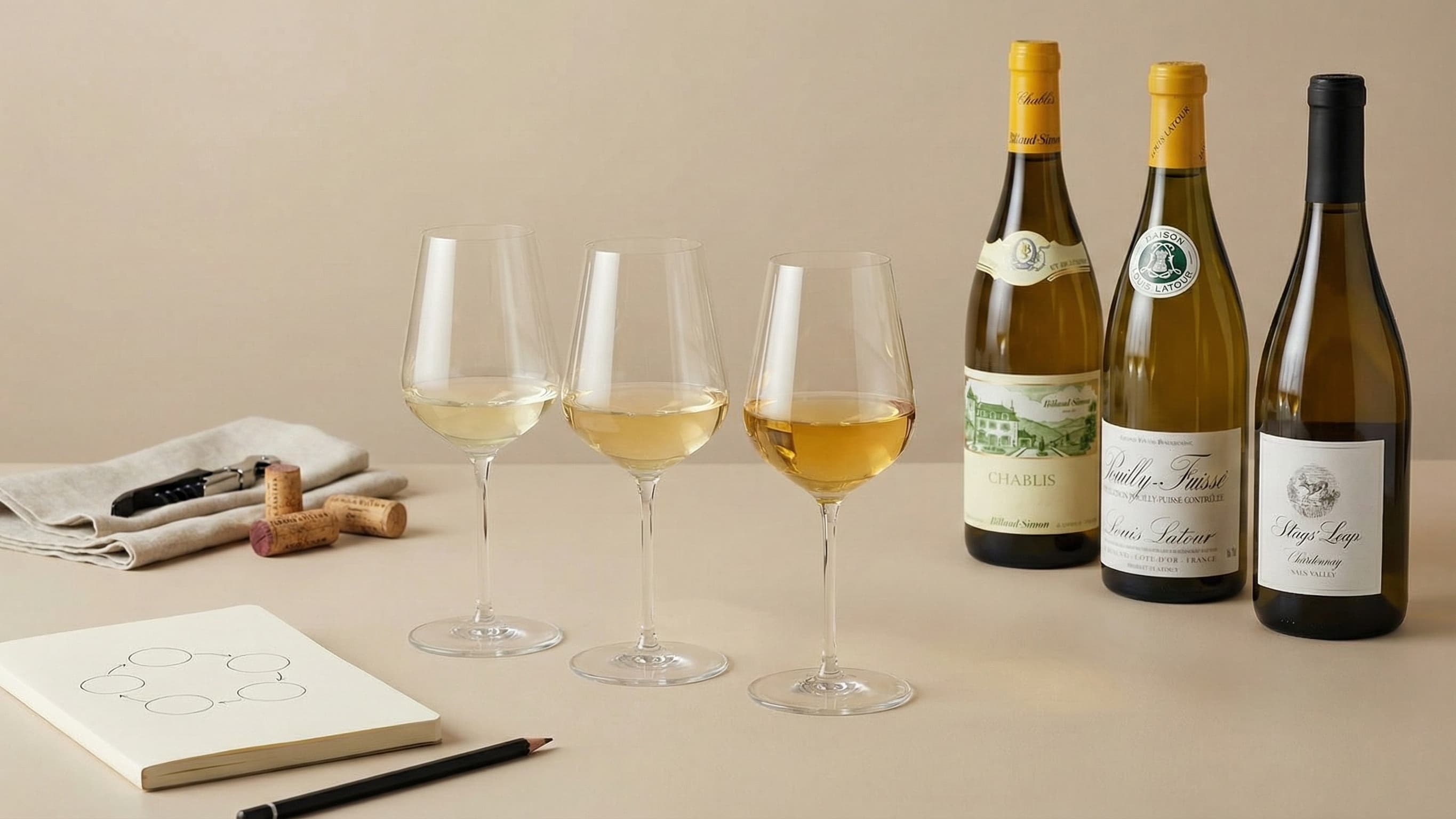
How: Buy three Chardonnays under $30 in contrasting styles—steely Chablis, ripe Pouilly-Fuissé, and oaked Napa Chardonnay. Taste side by side. No judgment, no notes. Just experience the range.
What to Notice:
- Where texture shifts from thin to creamy to viscous
- Where flavor moves from citrus to tropical to buttery
- Where the finish evolves from short to medium to lingering
Taste develops through contrast. You can only develop taste for what you’ve actually tried.
#2: Notice Resonance
Objective: Identify the wine that lands differently for you.
How: Revisit the three Chardonnays again. This time, notice which one makes you pause. Which pulls you back for another sip?
What to Notice:
- Does one feel more alive? More interesting? More complete?
- Which glass would you reach for again?
- What quality draws you—acidity, texture, finish?
We’re trained to defer to critics, price tags, labels. Resonance is personal: the sensation of something landing differently. That signal is information. Trust it.
#3: Follow Curiosity
Objective: Build your internal map by following one quality into new territory.
How: Identify which Chardonnay stopped you. Isolate one specific quality: the acidity, the minerality, the texture. Next time you buy wine, look for that quality in a different grape.
What to Notice:
- Can you find the same tension in Alsatian Riesling?
- The same creaminess in white Bordeaux?
- The same mineral edge in Savennières?
You’re following a thread. Curiosity-driven tasting builds a map that belongs to you.
This Week’s Reflection
Most people get stuck at Stage 2. They notice resonance but override it—because a critic said something different, or the price tag doesn’t match their reaction.
Here’s what I want you to try: After the tasting, write down one sentence about what resonated and why. Don’t edit it. Don’t second-guess it.