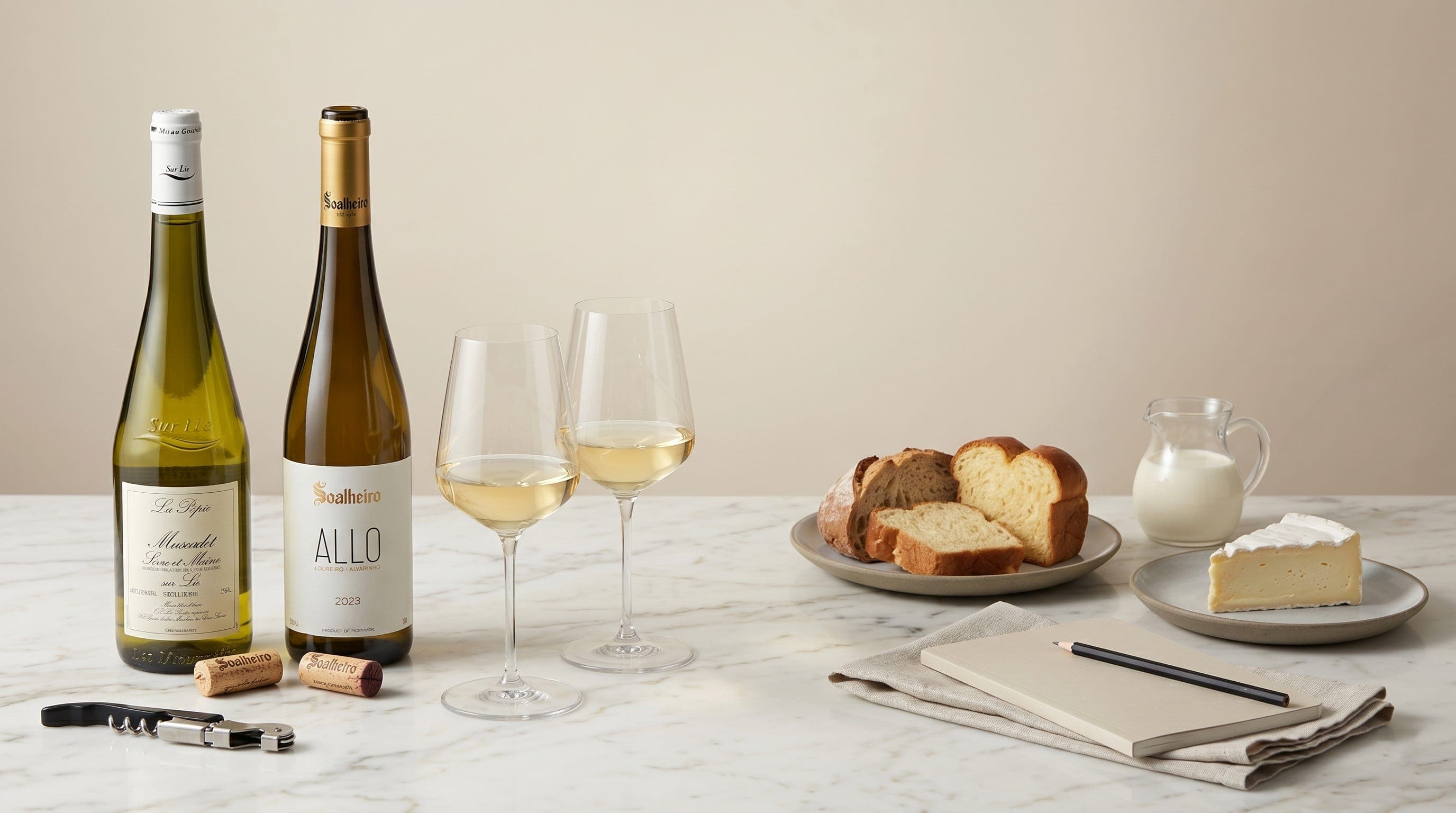
The first time I tasted a Muscadet sur lie next to a stainless-steel Vinho Verde, the difference was striking. Same weight on paper, same crisp acidity, both unoaked, both under thirteen percent alcohol. But the Muscadet had a creaminess on the back palate the Vinho Verde just didn’t. A faint suggestion of fresh bread under the citrus. I was expecting it to be lighter and plainer. It surprised me.
That texture has a name. It comes from a winemaking decision most drinkers never think about.
After a wine finishes fermenting, a sediment of dead yeast cells settles at the bottom of the tank or barrel. Winemakers call this lees. Most regions filter the lees out and bottle the wine clean.
In pockets of the wine world, winemakers leave the wine in contact with the sediment for weeks, months, or sometimes years. The yeast cells slowly break down (a process called autolysis) and release proteins, amino acids, and mannoproteins into the wine.
What you taste is the result: subtle bread, brioche, and biscuit aromas; a creamy, almost yogurt-textured mouthfeel; a longer, more integrated finish. This is the technique behind Champagne’s toasty character, Muscadet’s surprising weight for such a light wine, and the silky body of certain white Burgundies. Patience and contact with sediment add the texture after the grape has done its work.
Once you can taste lees, you can read a winemaker’s intent in the glass. “Creamy” stops being a vague descriptor and starts registering as a decision someone made on your behalf.
3 Taste Experiments: Feel the Lees Effect
Three traditions, three grapes, three price tiers. Each pair holds variety, climate, and oak roughly constant and lets lees aging carry the difference. Pick the experiment that matches your budget for the week. The lesson is the same in all three.
#1: Muscadet sur lie vs Vinho Verde
Accessible, ~$25–35 total
Objective. Isolate the lees effect inside two crisp, light, unoaked Atlantic whites that match on weight and acidity.
What to try:
- Muscadet Sèvre-et-Maine sur lie: Domaine de la Pépière, Luneau-Papin, or Domaine de l’Écu (~$15–25)
- Vinho Verde (no lees aging): Aveleda, Soalheiro Allo, or Broadbent (~$15–20)
What to notice:
- Bread, fresh dough, or brioche on the Muscadet’s nose
- A creamier, rounder mid-palate on the Muscadet
- A leaner, more linear finish on the Vinho Verde
- Identical citrus and salt notes in both
- A tiny prickle in the Vinho Verde against the Muscadet’s flat mouthfeel
The lesson. Two wines built from the same logic, cool climate, neutral grape, no oak, feel completely different in the mouth once one of them has spent six months sitting on its yeast. The grape and the climate set the frame. The lees decide whether the wine feels lean or creamy.
#2: Unoaked Chardonnay vs lees-aged Chardonnay
Mid, ~$40–55 total
Objective. Hold grape and oak constant and let lees aging carry the difference.
What to try:
- Stainless, no lees work (Chablis or Mâcon-Villages, clean style): Domaine William Fèvre Chablis, Joseph Drouhin Mâcon-Villages, or Louis Jadot Mâcon-Villages (~$20–28)
- Lees-aged, no new oak (white Burgundy with bâtonnage, or Albariño with extended lees): Verget Mâcon-Villages, Domaine de la Soufrandière Mâcon-Vinzelles, or Pazo de Señoráns Albariño (~$20–30)
What to notice:
- Lemon, apple, and white flowers in both
- A waxier, denser body on the lees-aged wine
- A faint hazelnut or pastry note that the clean version lacks
- A faster, leaner finish on the clean version
- A glycerin-like coating that lingers on the lees-aged wine
The lesson. Bâtonnage, the French term for stirring the lees back into the wine, is one of the quietest winemaking interventions and one of the most consequential. The Chardonnay grape produces the same fruit either way. The texture is a separate decision.
#3: Non-vintage Champagne vs extended-lees Champagne
Stretch, ~$90–130 total
Objective. Taste the same wine type at two different lees-aging depths and feel how time on yeast compounds the effect.
What to try:
- Standard non-vintage (~15–24 months on lees): Pol Roger Brut Réserve, Charles Heidsieck Brut Réserve, or Veuve Clicquot Yellow Label (~$50–65)
- Extended-lees or vintage (~3+ years on lees): Bollinger Special Cuvée, Pol Roger Vintage, or Charles Heidsieck Brut Millésimé (~$60–95)
What to notice:
- Green apple, lemon zest, and chalky minerality in both
- Toast, almond, and brioche on both, louder on the longer-aged wine
- A creamier, finer bead on the extended-lees bottle
- A longer, deeper finish from the wine with more lees contact
- A drier, more linear profile from the standard non-vintage
The lesson. Champagne’s signature autolytic character is a function of how long the wine sits on its second-fermentation lees before disgorgement. The grape contribution is roughly identical between a standard non-vintage and an extended-lees bottle from the same house. The bread, the cream, and the texture come from time and patience.
The Finish
Three traditions, three grapes, three price points, one mechanism. Once you can name the lees effect, you can taste it in places no one labels it for you: the rounder weight in a sur lie Albariño, the soft mouthfeel in a Crémant de Loire, the bready warmth in a properly aged Cava, the depth in an older Hunter Valley Semillon.
Reflective prompt. Of the three tasting pairs, which texture pulled you in? The clean and linear, or the rounder and creamier? There is no correct answer here. The lees effect is a stylistic decision a winemaker makes for a reader they hope is paying attention. Your preference is the beginning of a vocabulary for what you actually value in a wine.
One concrete action. Next time you buy a white from the Loire, Burgundy, Galicia, or Champagne, check the back label or the producer’s site for the words sur lie, bâtonnage, lees aging, or autolysis. Buy the one that uses the language explicitly. Take a single sip the moment you open it. See if you can find the bread.
Go Deeper
If this week’s idea stuck with you, these resources take the conversation further.
- Winemaking treatment: Lees contact (Australian Wine Research Institute). The clearest free overview of what lees aging does to a wine’s chemistry, mouthfeel, and oxidative stability.
- Maturation on lees (Comité Champagne). The Champagne authority’s own page on what happens during the years a Champagne sits on its second-fermentation lees. Underpins Experiment 3.
- Autolysis and the duration of ageing on lees independently influence the aroma composition of traditional method sparkling wine, Sawyer et al. (Australian Journal of Grape and Wine Research, 2022). Peer-reviewed work isolating which aroma compounds shift with autolysis itself and which shift with lees-contact time.
Now live: The Decant
The Polished Palate’s new Wednesday section launched this week. The first issue is out: Sideways moved Pinot 170%. Uncorked is coming for Napa. It is the opening piece in a twelve-week arc on the wine world Netflix’s Uncorked is about to land in. If you missed it, [[read it here]](https://thepolishedpalate.substack.com/p/sideways-effect-netflix-uncorked). Subscribers can adjust their preferences via Substack to receive Saturday only, The Decant only, or both.
Subscribe to The Polished Palate for weekly tasting experiments that build discernment one decision at a time.*