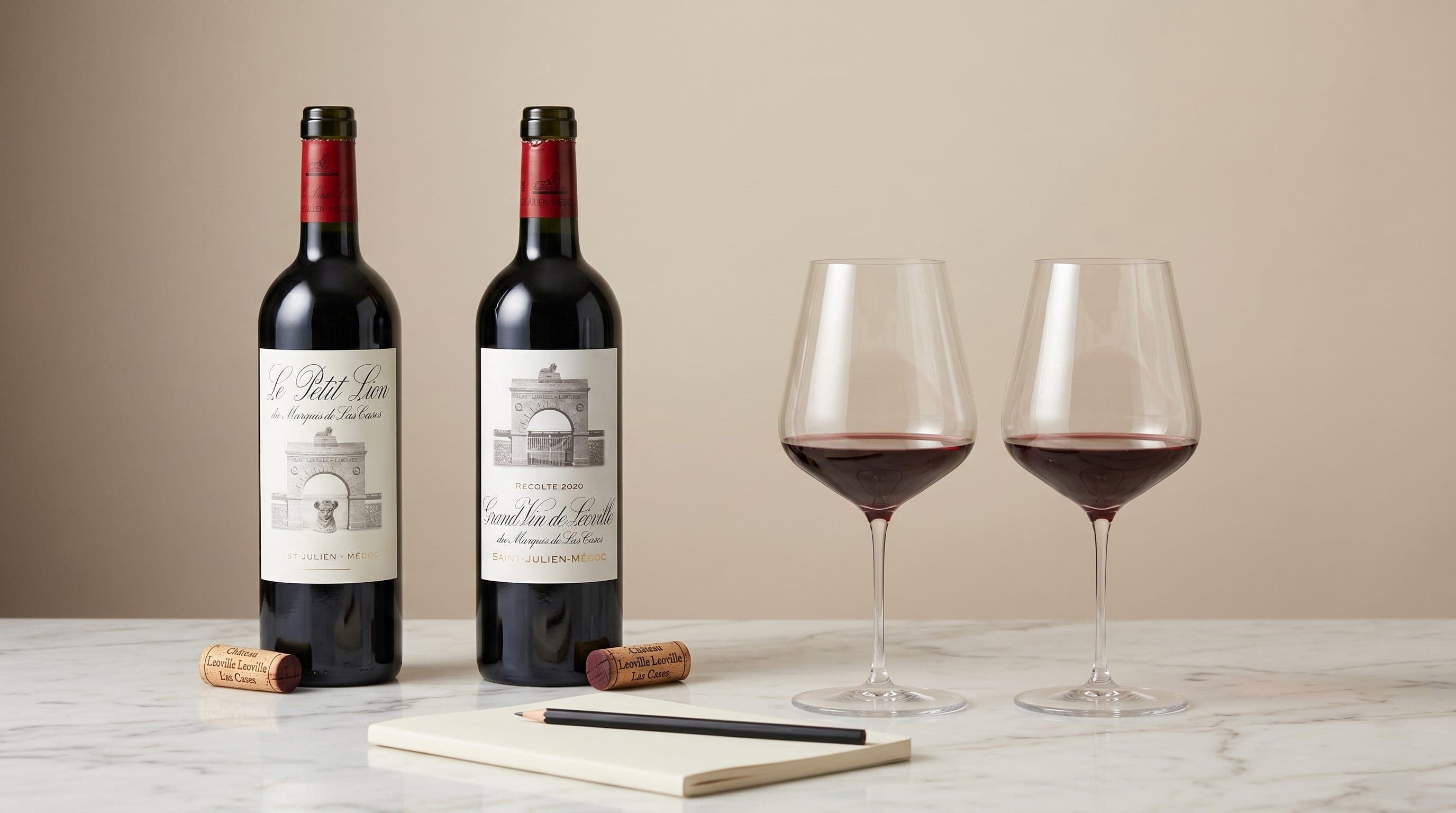
1 Big Idea: Blending is Editing
A great winemaker tastes thirty component lots and decides which four belong in the bottle, the way a painter chooses three pigments out of a box of forty.
The first time I watched a winemaker assemble a blend, I expected to see big drama. Barrels rolling. Vats churning. Some sort of reveal at the end where pieces clicked into place.
What I saw instead was a row of small glasses on a long table, a notepad, and a man frowning quietly into each one.
He sniffed, spat, and wrote a single number next to each sample. By the end of the morning, most of the glasses had a 2 or a 3 next to them. A handful had a 1. Then he picked up the 1s, mixed them in different proportions on the table, and started over.
He was deciding what to leave out, sample by sample. That was the work.
The picture most of us carry around
Most drinkers, when they hear the word “blending,” picture something close to home cooking. You take Cabernet, you add Merlot, you stir until it tastes good. The grapes are the ingredients. Blending is the assembly.
That picture is shallow. It captures the last 5% of what a blender does and misses the 95% that decides everything.
The first 95% is the bench. The bench is the scene I described at the top: a row of small glasses on a long table, a notepad, and a winemaker deciding which lots earn a place in the bottle. It’s an editor’s desk.
What actually happens at a blend trial
A great wine in a great year does not arrive at the bench as a finished idea. It arrives as a litter of small lots: the Cabernet from one parcel, the Merlot from another, the same Merlot from the same parcel but a different barrel, last year’s reserve wine still in the cellar, an experimental late-harvest plot the cellar master is curious about.
For a Châteauneuf-du-Pape, the bench can hold thirteen varieties from dozens of parcels. For a top Bordeaux, four or five varieties spread across hundreds of barrels. For a non-vintage Champagne, the year’s juice plus a library of reserve wines stretching back a decade.
The winemaker tastes these one at a time. They get graded. The Tablas Creek team in Paso Robles uses a three-mark system: a “1” might belong in the flagship cuvée, a “2” is good but headed for a varietal bottling, a “3” has problems that need attention or, if the problems do not resolve, gets sold off and never sees a Tablas Creek label.
Then the trials begin. The high marks get combined in different proportions. The team tastes blind, ranks, argues, blends again. Sometimes the best lot gets cut because it overpowers the chord. Sometimes a “2” gets pulled in to soften an edge. The work is iterative and mostly subtractive.
By the end, the bottle on the shelf carries maybe four lots out of the thirty or fifty that walked into the room.
The reframe
Here is where the picture has to flip.
Blending is subtraction. The bottle on the shelf is what survived the cull, and the blender’s real work happens on the wines that did not make it.
The Bordeaux first-growth label you eventually pour, in a strong year, contains the juice from roughly a third of the estate’s harvest. The other two-thirds did not vanish. They went into the second wine, the third wine, the bulk market. They were edited out.
A “60% Cabernet, 35% Merlot, 5% Cabernet Franc” line on a back label is a verdict. The producer is telling you, in numbers, what survived the cull.
Painters work this way too. They choose three pigments out of forty and leave the rest on the shelf. The painting is what got chosen, and just as much what got left out.
The question a great blender asks at the bench is “what does not belong here?”
What this changes for how you read a wine
Once the editorial picture lands, two things become available to you.
First, you stop reading varietal labels as a sign of seriousness. A 100% Cabernet is also edited; the selection happens at the parcel and barrel level: which barrels survived the cut, which clones got sent to the second wine, which lots got sold off. Single-varietal bottlings carry an editor’s hand too. They just show it earlier in the process.
Second, you start reading back-label percentages with new respect. The 5% Cabernet Franc in a Bordeaux is a curatorial choice the producer made on purpose, after tasting through dozens of options. Subtract it in your imagination. The wine collapses.
You can taste this if you know to look for it.
3 Tasting Experiments
The same lesson, taught three times, in three different wine traditions. Each experiment is a side-by-side comparison: the unedited single grape next to the edited blend it grows up to belong to. You are not trying to identify which is “better.” You are training your ear to hear what the editor’s hand sounds like.
#1: Cabernet, alone vs in conversation
Objective: Hear what Merlot, Cabernet Franc, and Petit Verdot bring to a Cabernet that has none of them.
What to try:
- Wine A — 100% Cabernet Sauvignon ($18–25). Look for Robert Mondavi Napa Cabernet, Concha y Toro Marqués de Casa Concha (Chile), or Bonterra Cabernet (California).
- Wine B — Bordeaux blend ($18–25). Look for Mouton Cadet Rouge, Château Greysac (Médoc), or Maison Sichel “Sirius.”
How: Open both forty minutes before you taste. Pour about three ounces into the same glass shape, side by side. Smell A first, then B. Take a sip of A and let it sit a moment before swallowing. Then a sip of B. Then back to A.
What to notice:
- The angle of the entry. Does the Cab start sharp, the blend start rounder?
- The middle of the palate. Where the Cab feels straight, the blend’s Merlot fills in a curve.
- The lift on the nose. That floral note in the blend (raspberry leaf, violet) is Cabernet Franc.
- The finish. The blend usually stays longer in the mouth.
The lesson: A 100% Cab is the spine. The Bordeaux blend is the spine plus the muscles around it. The blend feels more whole because Merlot’s flesh, Cab Franc’s perfume, and Petit Verdot’s spice fill in what the varietal Cab cannot.
#2: Grenache, solo vs in chorus
Objective: Hear what Syrah and Mourvèdre add to Grenache that Grenache cannot do alone.
What to try:
- Wine A — 100% Grenache / Garnacha ($16–25). Look for Borsao “Tres Picos” (Spain), Yangarra Estate Old Vine Grenache (McLaren Vale), or a varietal Grenache from a Spanish or Australian producer your shop carries.
- Wine B — Côtes du Rhône GSM blend ($14–22). Look for Guigal Côtes du Rhône, Famille Perrin “Reserve” Côtes du Rhône, or Domaine de la Janasse Côtes du Rhône.
How: Both wines like a slight chill, around 60°F. Pour both, smell both, then taste in alternation. Hold each in your mouth for a few seconds before swallowing.
What to notice:
- The fruit profile. Solo Grenache is bright and red (raspberry, cherry); GSM darkens (blackberry, plum).
- The middle line. The blend has a spine that Grenache solo doesn’t. That is the Syrah.
- The back of the nose. A smoky, savory, almost meaty note in the blend. That is the Mourvèdre.
- The finish. Grenache solo finishes warm and soft; GSM finishes with grip.
The lesson: Solo Grenache is one bright voice. The GSM blend is what southern Rhône winemakers have been selecting toward for centuries: Grenache for fruit, Syrah for structure, Mourvèdre for darkness. Three voices edited together, holding a shape no single grape can hold alone.
#3: Champagne, single voice vs the chord
Objective: Hear what Pinot Noir and Pinot Meunier add to Chardonnay in a traditional Champagne blend.
What to try:
- Wine A — Blanc de Blancs (100% Chardonnay) ($45–65). Look for Pierre Péters “Cuvée de Réserve,” Larmandier-Bernier “Latitude,” or Pol Roger Blanc de Blancs.
- Wine B — Traditional NV Champagne (Chardonnay + Pinot Noir + Pinot Meunier) ($45–65). Look for Pol Roger Brut Réserve, Bollinger Special Cuvée, or Vilmart “Grand Cellier.”
How: Both bottles need to be properly chilled (45°F, an hour in the fridge or twenty minutes in an ice bath). Pour into white-wine glasses, not flutes. Flutes hide everything you need to taste here. Smell A, smell B, then taste in alternation.
What to notice:
- The shape of the wine. Blanc de Blancs is a beam. The blend is a sphere.
- The mid-palate. The blend has a body and a roundness that the Blanc de Blancs does not have. That is the Pinot Noir.
- The warmth on the finish. A stone-fruit, almost earthy quality in the blend that Chardonnay alone can’t produce. That is the Pinot Meunier.
- The length. Blanc de Blancs usually holds longer; the blend is fuller but shorter.
The lesson: Blanc de Blancs is precision and length. The traditional NV is body, warmth, and that same Chardonnay precision braided into them. Same family, different shapes. Both are fully realized in their own direction.
The Finish
Across three different wine traditions, the same act: a winemaker tasted dozens of component lots and decided what to leave out. The 100% Cabernet was edited at the barrel level. The Bordeaux blend was edited at the variety level. Both were curated. The painter chose three pigments out of forty. The blender chose four lots out of thirty. What you tasted this week was the result of those choices, audible in the glass.
Across the three experiments, which side of each pair did you reach for second? The varietal or the blend? The single voice or the chord? Pay attention to the pattern. It is telling you what you actually value in a wine: the thrill of a single bright note, or the quiet seamlessness of voices that have learned to listen to each other. Both are legitimate preferences worth knowing about yourself.
This week, before you buy your next bottle, look at the back label and ask what got cut.
Go Deeper
- 2023 White Blending Trials (Jason Haas, Tablas Creek Blog, March 2024). Tablas Creek’s general manager walks through four days at the blending table, 37 component lots, and the 1/2/3 grading system the team uses to decide which lots are worthy of the flagship Esprit cuvée. This is the rare primary source where a working winemaker shows you the actual scorecard. Read it after this issue and the editorial picture clicks into place.
- All In a Good Cause - Blending Bordeaux (Jancis Robinson MW, JancisRobinson.com). Robinson sits down at a Bordeaux blending session built around templates from Eric Boissenot, the consultant oenologist who advises Lafite, Margaux, and most of the other first growths. Participants worked through fourteen permutations of eight component samples (three Merlots, two Cabernet Francs, three Cabernet Sauvignons). It is the closest most drinkers will get to Boissenot’s table, and it makes plain why first-growth châteaux keep an outside palate on retainer for a single decision per year.
- The Role of Major and Minor Grapes in Wine Blends (Kelli White, SevenFifty Daily, 2019). Four winemakers from four regions explain what minor varieties (Petit Verdot, Carignan, Picpoul Blanc, and others) actually do inside a blend. The piece is built around the idea that single-varietal labeling dominates marketing while blending dominates the bottle. Direct support for this week’s reframe.