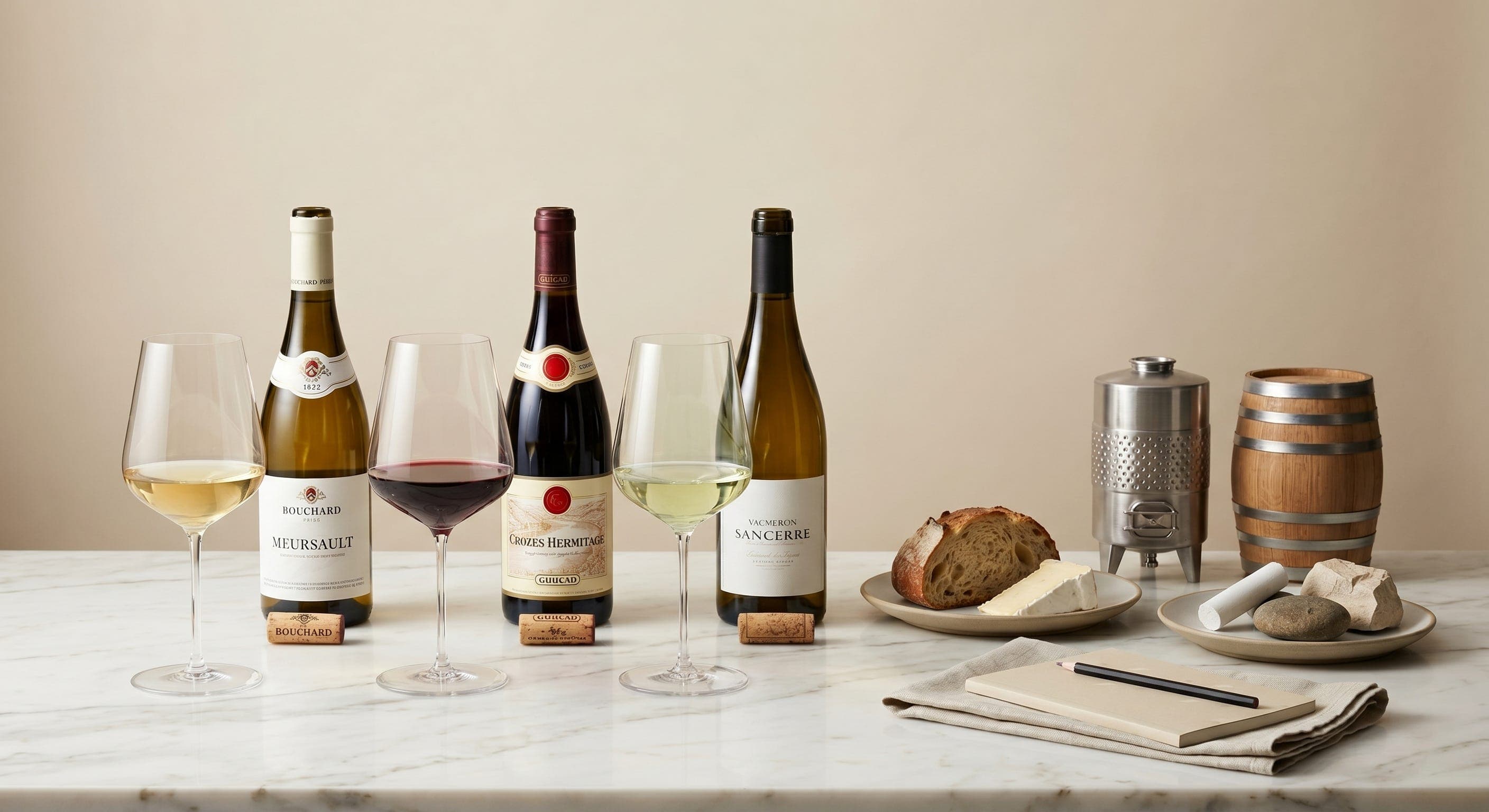
1 Big Idea: The hand behind the glass
When I first learned to taste seriously, I treated wine like weather. I thought it was something that happened to the grapes, beyond anyone’s control, that I was lucky to catch in a glass. The vineyard got all the credit, and the winemaker was a kind of caretaker who tried not to get in the way.
Three months on the subject of how wine is actually made has turned the mystery into understanding. Almost everything you notice in a glass is a decision someone made. The vanilla edge is a choice about oak. The cream and the texture come from a choice about lees. The shape of the tannins traces back to fermentation, the structure to the blend, the clarity to a round of fining most labels never mention.
Place still matters enormously. It sets the raw material, but what you taste on top of it is craft.
That changes the kind of drinker you become. Once you can hear the hand behind the glass, the mystique starts to fade in the right way. Terroir stops being a magic word. The score on the shelf talker stops being the last word, because you can read the bottle yourself. You stop waiting to be told what is good and start noticing what was done and whether it moved you.
That is taste sovereignty arriving through the cellar door. This quarter, the work was learning to taste agency where you used to taste mystery.
Everything Q2 taught about how production shapes what’s in your glass
The Q2 arc, one line per issue, easy to skim and easy to revisit.
- Oak: Oak is the flavor of a decision, and whether you like it is information about you, not a verdict on the wine.
- Minerality: That wet-stone impression does not come from minerals in the soil. It comes from acidity and winemaking, playing a convincing trick.
- Balance: A great wine is a managed fight between acid, alcohol, tannin, and fruit, with no single side allowed to win.
- The order of learning: Most wine education runs backward. Start with your own perception, attach the names afterward.
- Fermentation: Terroir takes the credit, and fermentation quietly does a great deal of the work you actually taste.
- Vessels: Steel and barrel are only two options among many. Concrete, clay, and big old oak each leave their own fingerprint on the wine.
- Blending: A blend is an act of editing, and what gets left out shapes the glass as much as what makes the cut.
- Following curiosity: Three concrete moves for going deeper on whatever style already pulls at you.
- Lees: The brioche and the cream come from spent yeast resting in the wine, not from sugar and not from oak.
- DIY tasting: You can run controlled comparisons on your own counter that teach faster than any tasting note ever will.
- What’s in the bottle: Additives, sulfites, and fining are ordinary. The natural and conventional poles are the ends of a spectrum, and you decide where you sit on it.
3 Taste Experiments
# 1: Taste 3 decisions in 1 wine
Objective: Taste vessel, lees, and oak working together by comparing two Chardonnays built on opposite choices.
What to try: A steel-fermented, no-lees, unoaked white against a barrel-fermented, lees-aged one. Accessible unoaked side: Louis Latour Mâcon-Lugny or Domaine William Fèvre Petit Chablis ($18 to $25). Worked-over side: a village Meursault from Louis Jadot or Joseph Drouhin ($50 to $65). Same grape, two philosophies.
What to notice: The unoaked wine should feel taut and direct, citrus and wet chalk, a clean edge. The Meursault should feel rounder and wider, with the cream and faint toast of lees and barrel filling out the mid-palate. Look for where the texture changes, not just the flavor.
The lesson: This is Weeks 13, 18, and 21 in one mouthful. None of the difference comes from the vineyard alone. It is vessel, yeast, and time, layered by hand. Decide which version you actually want to drink, and notice that the answer is a fact about you.
# 2: Single grape vs. the edit
Objective: Separate what fermentation and blending each contribute by comparing a single grape to a blend in the same tradition.
What to try: A 100 percent Syrah against a Grenache-led blend from the Southern Rhône. Single grape: Guigal Crozes-Hermitage or Delas Crozes-Hermitage ($22 to $30). Blend: Guigal Côtes du Rhône or Famille Perrin Côtes du Rhône Réserve ($15 to $20). Both reds, two different construction jobs.
What to notice: The Syrah should read focused and linear, one clear voice, with peppery dark fruit. The blend should feel rounder and more layered as Grenache warmth and other grapes fill the gaps. Notice how blending widens the wine while fermentation sets its grip and texture.
The lesson: This is Weeks 17 and 19 side by side. A single grape shows you fermentation with nowhere to hide. A blend shows you editing, several parts arranged into one. Neither is the better wine in the abstract. The question is which shape you reach for.
# 3: Where “minerality” actually comes from
Objective: Separate two perception lessons at once, what “minerality” really is and how to read which element leads a wine’s balance, by tasting the same grape grown cool against warm.
What to try: Two unoaked Sauvignon Blancs from opposite climates. Cool, high-acid: Sancerre (Domaine Vacheron, Henri Bourgeois “Les Baronnes,” or Pascal Jolivet) or a flinty Pouilly-Fumé ($24 to $32). Warm, riper: a New World bottling such as Honig or Frog’s Leap from California, or a Casablanca Valley Sauvignon from Chile ($14 to $20).
What to notice: In the cool wine, the wet-stone, flinty “mineral” impression and a nervous, mouth-watering acidity. In the warm wine, riper fruit, a rounder body, and acid that sits further back. Then work the balance the way Week 15 framed it: in the Sancerre acid leads, in the warm bottle fruit and alcohol do.
The lesson: This is Weeks 14 and 15 together. The “minerality” you taste is not soil in the glass, it is mostly acidity and winemaking, and it shows up loudest where acid leads the balance. Once you can locate the lead element, you can say why one wine feels stony and taut and the other feels soft and round, and you stop crediting the rock for what the acid is doing.
The Finish
A quarter ago, the inside of the bottle was mostly a mystery to many of us. Now you can taste what a vessel adds, what fermentation builds, what a blend leaves out, and what fining smooths away. You taste agency now, where you used to taste mystery, and that is the kind of progress that compounds with every bottle.
One question is worth sitting with: which Q2 lesson changed how you buy, not just how you taste? For most people it is one specific thing, the cue they now look for on a back label or reach for on a list.
So this week, run one of the three tastings above. Pick the comparison that matches your budget, set the two glasses side by side, and listen for the hand behind each one.
Next quarter we leave the cellar and go outside. Q3 is Climate and Character, on how place, weather, and time shape the glass, and how to taste it for yourself. If you are new here, the eleven issues above are the best place to start.
What you built this quarter is the ability to taste the difference between what a place gave and what a person chose. That is the skill that makes every bottle from here yours to judge.
Go Deeper
If this quarter’s throughline stuck with you, these take it further.
- Wine Folly, 6 Winemaking Processes and How They Affect Flavor: A quick, illustrated tour of the production choices behind your glass, the same throughline this quarter followed, skimmable in one sitting.
- VinePair, Wine 101 podcast: Keith Beavers unpacks one wine idea a week in about fifteen easy minutes, from oak and malolactic to carbonic, ideal for turning a commute into palate practice.
- Émile Peynaud & Jacques Blouin, “The Taste of Wine: The Art and Science of Wine Appreciation”: The foundational text on how winemaking decisions translate into what you perceive, from the man who modernized the field.
- Jamie Goode, “The Science of Wine: From Vine to Glass”: A readable, evidence-first tour of the production choices behind every glass, including oak, lees, and fermentation.