1 Big Idea: Age Is a Trade
Somewhere in your home there might be a bottle you’re saving. Maybe it came back from a trip, or it was a gift, or it simply cost enough that opening it on a Tuesday feels wrong. You’re waiting for the right moment, and part of the waiting is a quiet assumption that the wine is improving while it sits.
Almost everything on a wine shelf is made to be drunk within a year or two of release. Hold a wine like that for a decade and the fruit does the only thing fruit does over time: it fades, and nothing arrives to replace it.
Here is what age actually does to the wines that can handle it:
- The compounds that read as fresh fruit break down first. Tannin molecules link into longer and longer chains, which makes them feel smoother in your mouth, and eventually they grow heavy enough to drop out of the wine as sediment.
- Color drifts: reds fade from purple toward garnet and brick, whites deepen from straw toward gold and amber.
- And a third layer of aromas develops slowly in the bottle: dried fig, leather, tobacco, mushroom, roasted nuts, honey. Wine people call these tertiary flavors, and their arrival is a trade: fresh fruit out, complexity in.
One thing decides how fast that trade runs, and no shelf talker mentions it: where the bottle is stored. Heat is the accelerator. The reactions above roughly double in speed for every 18°F the temperature rises, so a bottle at room temperature ages about twice as fast as one in a cellar at 55°F, and a bottle that swings between warm afternoons and cool nights ages faster and less evenly than either.
I learned this on a bottle I cared about. I left a 2015 Barolo from Marchesi di Barolo with friends to keep for me, a wine I expected to hold for 30 or 40 years. It spent the wait in their kitchen cabinet. We opened it after 9 years, and it tasted far older than 9: the fruit had dried out, and what remained was almost entirely tertiary, leather and dried fig where I had expected a Barolo still in its youth. That wine had everything it needed to age slowly except a cool, steady place to do it.
Which brings up the “drinking window.” Critics and retailers print windows because windows sell bottles: “cellar through 2035” reads as pedigree, and pedigree justifies price. The person who wrote that line doesn’t know your storage conditions or your palate, and the chemistry above doesn’t run on a schedule. Treat the printed window as a sales flourish until your own tasting confirms it. This week you build the palate that can check.
3 Taste Experiments
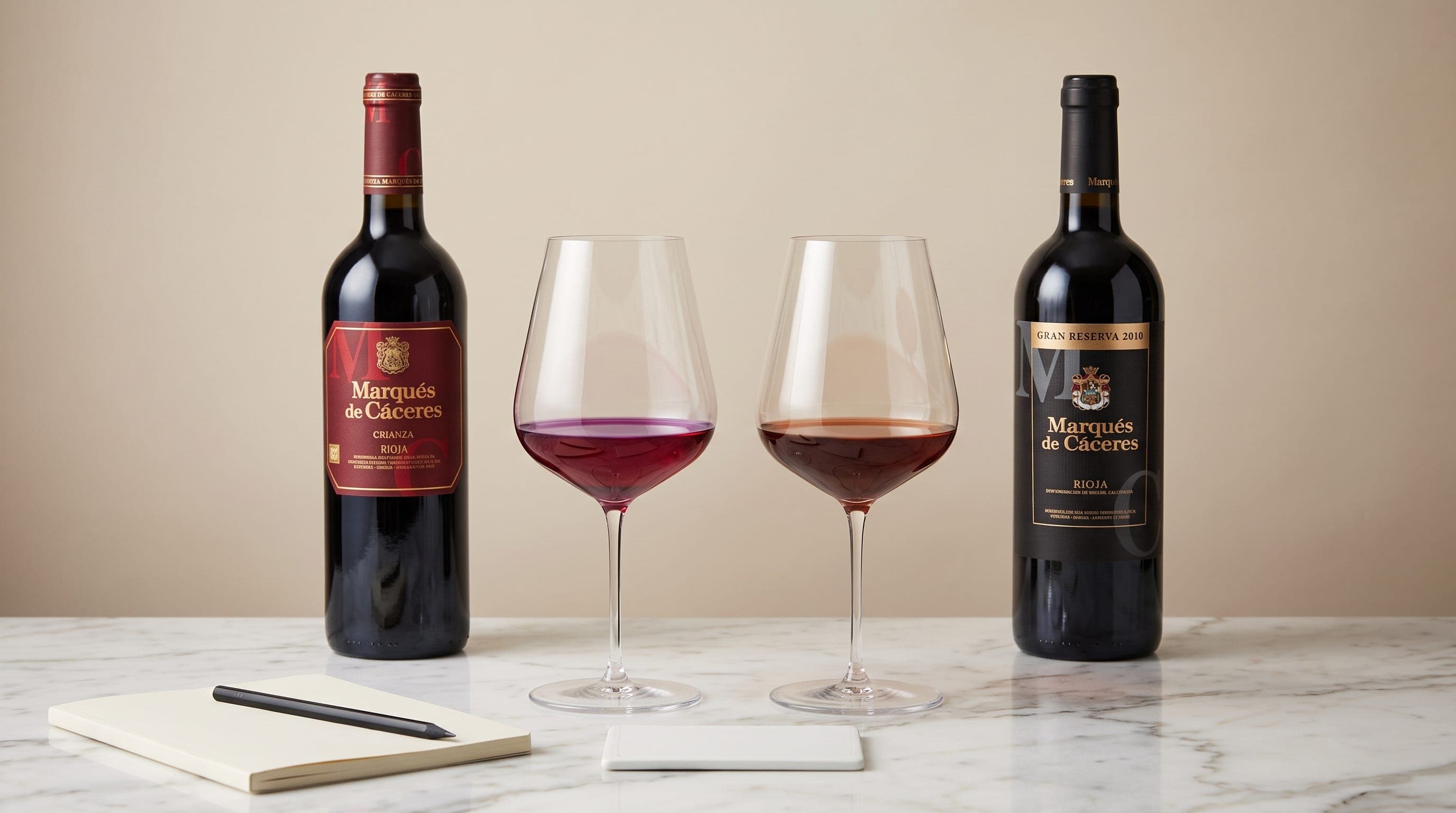
#1: Rioja Crianza vs Rioja Gran Reserva
- Objective: Taste what 5 or more extra years do to the same grape, from the same house, with the winery doing the cellaring for you.
- What to try: One crianza and one gran reserva from the same producer, so the only thing that changes between the two glasses is time. Marqués de Cáceres Crianza ($11-15) with Marqués de Cáceres Gran Reserva ($30-35), or Beronia Crianza (about $15) with Beronia Gran Reserva (about $30). Spanish law releases crianza reds at 2 years old and gran reserva at 5 minimum, and most houses hold longer, so the gran reserva on your shelf is often close to 10 years old the day you buy it.
- What to notice: Tilt both glasses over something white. The crianza stays ruby to the rim; the gran reserva fades to garnet, even brick, at the edge. Smell fresh cherry and vanilla in one, then dried fig, tobacco, and worn leather in the other. Feel the tannin: grip in the crianza, something closer to suede in the gran reserva. Time the finish on each.
- Lesson: Rioja’s age categories are defined by law and printed on the label, which makes the gran reserva shelf the most honest aged wine in the store. Buying both bottles from one house takes the producer’s style out of the comparison, so what you taste is the decade. Around $30 buys that decade of cellaring, done by someone else, in a cellar someone else already paid for.
#2: Ruby Port vs 10 Year Tawny
- Objective: See the direction of aging with your eyes before your nose confirms it, in the most exaggerated fruit-to-tertiary trade money can buy.
- What to try: One ruby port: Fonseca Bin No. 27 ($18-20) or Graham’s Six Grapes (about $22). One aged tawny: Graham’s 10 Year Tawny (about $40) or Taylor Fladgate 10 Year Tawny (about $38). Same region, same grapes, often the same house; the tawny simply spent about a decade in barrel with slow, deliberate exposure to oxygen.
- What to notice: Pour them side by side and look before you smell. The ruby is purple-red; the tawny is amber-brown with no red left in it. Then the aromas: blackberry jam and plum in the ruby, then caramel, fig, walnut, and orange peel in the tawny. The blackberry of the ruby has become the fig and walnut of the tawny. Both are sweet and fortified, so age is the only big variable between them.
- Lesson: Every wine that ages moves in the direction the tawny has already traveled: fruit toward dried and cooked tones, color toward amber. Both bottles hold for weeks after opening, which makes this the lowest-commitment aging lesson in wine.
#3: Supermarket Soft Red vs Young Nebbiolo
- Objective: Learn to feel whether a young wine has anything for time to work with, which is what “built to age” literally means.
- What to try: One soft mass-market red: Apothic Red (about $10) or Bogle Essential Red (about $12). One young Nebbiolo: G.D. Vajra Langhe Nebbiolo ($23-26), Produttori del Barbaresco Langhe Nebbiolo (about $30), or Vietti Perbacco (about $28).
- What to notice: The soft red is round, dark-fruited, and complete; nothing pokes out, and the flavor is gone a few seconds after you swallow. The Nebbiolo is paler in the glass and far more insistent in the mouth: acid pushes at your cheeks, tannin grips your gums, and the flavor keeps going long after the fruit stops. Count the seconds honestly for both.
- Lesson: The soft red was engineered by a large producer to taste finished the day it is bottled, because it will be drunk within days of purchase, and the producer knows it. That is fair design for its job. The problem starts when marketing copy borrows cellar language for wines with nothing in reserve. Acid, tannin, and concentration are what a wine needs to survive years in bottle. A wine without them only gets thinner with time, and no printed drinking window changes that.
Pocket Palate: Reading age in any glass
- Color: Reds fade purple to ruby to garnet to brick at the rim; whites deepen from straw to gold to amber. Both move toward amber from opposite ends.
- Fruit: Fresh fruit goes first. Dried fruit, leather, tobacco, nuts, mushroom, and honey arrive in its place.
- Tannin: Molecules link into longer chains as wine ages, so grip softens toward silk and sediment collects in the bottle.
- Structure: Acid, tannin, sugar, and concentration are what a wine needs to age well. A wine that is soft and complete today has no acid or tannin to trade for complexity later.
- Storage: Temperature sets the speed. Cellar temperature, about 55°F, keeps the trade slow; room temperature roughly doubles the speed, and swings between the two are worse than either. Cool, dark, and steady.
- Shortcuts: Rioja gran reserva and 10 year tawny port are legally certified age you can buy tonight, no cellar required.
The Finish
This issue opens a quarter about time: what it does to a wine, and what it builds in a palate. Time trades fresh fruit for tertiary complexity, links tannins into softer chains, and pulls every wine’s color toward amber.
Most bottles were never given the structure to make that trade, and the ones that were still need a cool, steady place to make it slowly. The drinking window printed next to a price tag is a guess presented as precision, and after this week you can check it yourself, because you now know what a decade smells like.
So the question lands back on you: which side of the trade do you enjoy? Be open to the answer being both. I love old Bordeaux, and I almost never drink it, because I don’t buy wine to age at home. When a bottle with real age on it comes around, I enjoy every glass, and the rest of the year I am just as happy with a young red still full of fruit.
If you ran the Rioja experiment and kept reaching for the crianza’s fresh cherry, that is a legitimate, settled answer, and it will save you years of storage and a meaningful amount of money. If the gran reserva won, you now know what you are looking for, and you know where to buy it without owning a cellar.
A preference about age is exactly as personal as a preference about oak or sweetness, and tasted evidence beats a printed window every time.
One action this week: pick the pair that fits your budget, pour both, and write down which glass you kept returning to and one specific reason why. Then think about the bottle you have been saving for a moment that never quite arrives. If it is a soft, fruit-forward wine more than 3 years old, or a serious one that has spent those years somewhere warm, the moment is now. Open it.
Before you go, one date to hold: on Monday, February 15, 2027, The Polished Palate goes live for the first time. A guided online tasting built like the experiments you run at home on your own: a designed flight you can shop for anywhere, real-time discussion, and me walking you through it. It is free for subscribers, and the flight and the time land in your inbox in January. I want a seat at the first one
Go Deeper
If this week’s idea stuck with you, these take it further.
- Madeline Puckette, How Wines Age (Wine Folly, 2015): A visual walkthrough of what aging changes in color, aroma, and texture, with charts showing how long common styles actually hold.
- Daniel Pambianchi, Tannin Chemistry (WineMaker Magazine): A working winemaker’s explanation of how tannins polymerize, soften, and fall out of wine as sediment during aging.
- Wang et al., Investigating the Effect of Three Phenolic Fractions on the Volatility of Floral, Fruity, and Aged Aromas (Food Chemistry: X, 2022): Peer-reviewed evidence that tannin polymerization suppresses fruity aromas in aged red wine, the chemistry behind the trade this issue teaches.