1 Big Idea: The Markup Follows the Names You Know
The wine list lands on your side of the table and everyone waits. You scan 12 pages for a name you have seen in a shop, find a Rombauer Chardonnay you know you like, and order it so the moment can end.
That choice feels safe, and the list is priced for it. At a restaurant you pay for a famous name twice. The first time is in the shop price, which already carries the name. The second is in the markup. Wine Spectator’s Dr. Vinny puts the standard restaurant bottle at roughly twice what a shop charges.
In MEL Magazine in 2020, Adam Elder, reporting with Los Angeles sommelier and wine buyer Chiara Shannon, wrote that the names diners ask for get marked up more than the standard: Silver Oak Cabernet, Rombauer Chardonnay, Château Miraval rosé, and Napa Cabernet and Chardonnay in general, because people will pay more for a name they know. That is one report built on one sommelier’s account, so treat it as a pattern to check on the list in front of you.
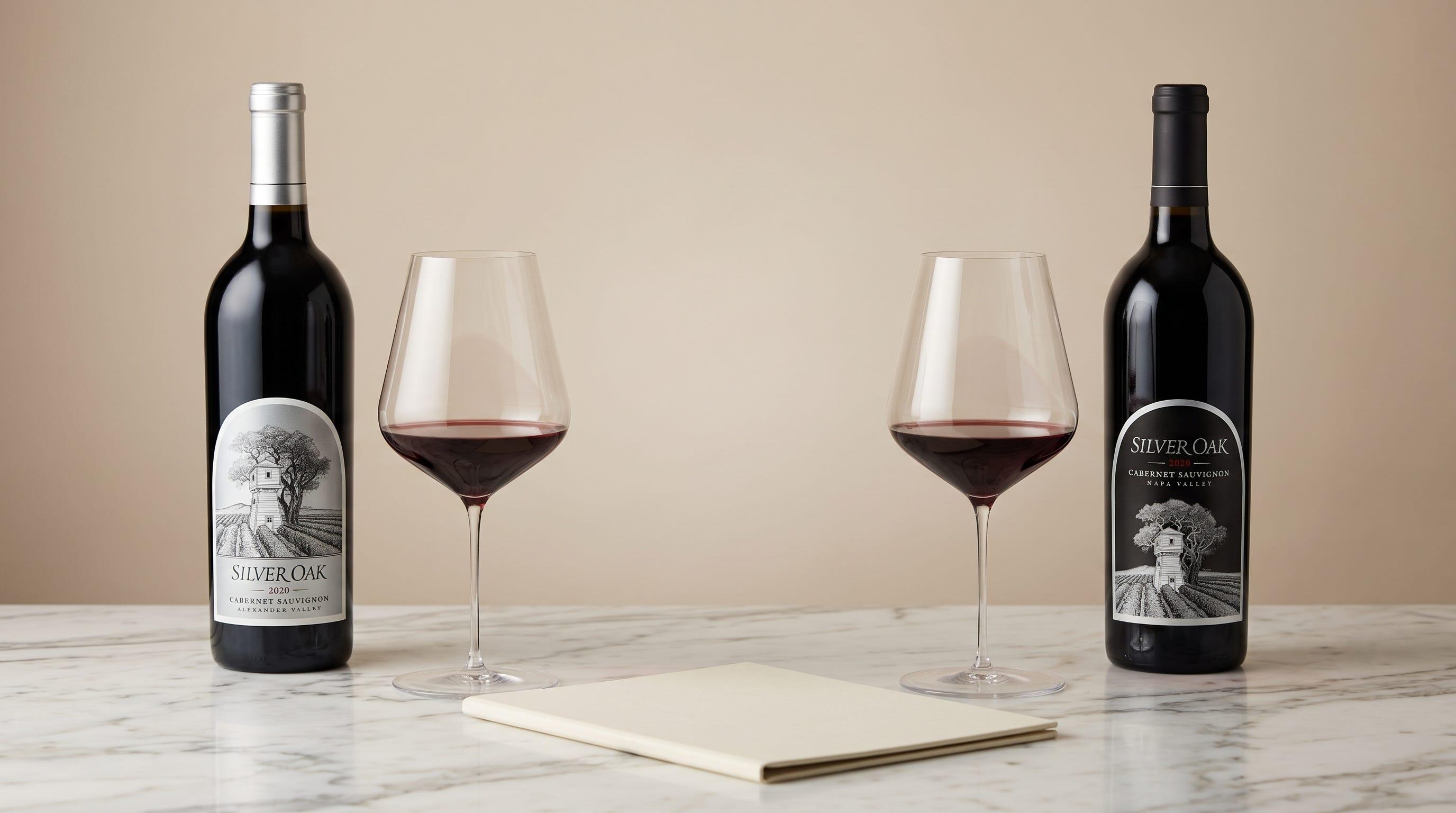
The worked example. Silver Oak releases its Alexander Valley Cabernet at $90 and its Napa Valley Cabernet at $165. At twice the shop price, that is about $180 against $330 on a list. Many lists take a smaller multiple on pricier bottles, Dr. Vinny notes, which narrows that gap without closing it.
So when I say value in this issue, I mean more wine per dollar from the same producer and the same grape: the producer’s second bottling, from the neighboring valley or from younger vines, priced without the famous label’s premium. Position on the page is the weaker guide: when economists David de Meza and Vikram Pathania tested the old second-cheapest-bottle rule on London lists, the markup on the second-cheapest wine was significantly below that on the 4 next most expensive wines.
I am a Certified Sommelier and I have worked restaurant floors. On a restaurant floor, I can only steer a table toward value once I know the number. Finding value takes 3 moves, and you can make all of them in the 2 minutes you have: know when the bottle beats the glass, read one line past the famous name, and tell the sommelier your number.
3 Taste Experiments
This week 2 of the 3 experiments happen at the table with the list in your hand, and #2 is the one you taste.
#1: The 4-glass test
- Objective: Know, before you order, whether the bottle is the cheaper way to drink the wine.
- What to try: Find any wine listed both by the glass and by the bottle; a white, a red and a sparkling each make a good test if the list has them. Multiply the glass price by 4 and compare it to the bottle price. You can rehearse this at home tonight with the online list of a restaurant you plan to visit, if it posts its wine list with prices.
- What to notice: Whether the list states a pour size (5 or 6 ounces are common). How close 4 glasses come to the bottle price. At the table, whether the 2 of you will want a second glass each, and whether everyone wants the same wine.
- Lesson: Many restaurants price a glass near what they paid for the whole bottle; Matt Kramer summed it up in Wine Spectator as “The first pour pays for the bottle.” Multiply by 4 because restaurant pours often run 6 ounces, and a 750 ml bottle holds 4 of those, the count BevSpot’s glass-pricing guide assumes (5 at the 5-ounce standard pour the NIAAA uses). If 4 glasses cost as much as the bottle and the table will drink 4, the bottle is the better buy and it arrives at the table sealed. The glass is worth its price when you want 1 glass of something, or when 2 people want different wines. Then you are paying for the restaurant to take the risk on an open bottle, and that is a fair thing to pay for.
#2: The bottle next door
- Objective: Taste what the famous name’s extra money buys in the glass, from the same producer and the same grape.
- What to try: Silver Oak Alexander Valley Cabernet Sauvignon (released at $90) next to Silver Oak Napa Valley Cabernet Sauvignon (released at $165). The winery ages both for 24 months in American oak; the Alexander Valley is 95% or more Cabernet Sauvignon, and the Napa is about 80%, with Merlot and Cabernet Franc in the blend. For a lower-cost pair, Produttori del Barbaresco Langhe Nebbiolo (Piedmont, $30-35 retail) next to the same cooperative’s Barbaresco ($40-55 retail); Decanter’s Andrew Jefford called the Langhe “pure declassified Barbaresco (from younger vines).” At dinner, order one bottle and ask for a glass of the other if it is poured, or split the pair with another couple. Both pairs also work opened at home.
- What to notice: How dense the fruit feels and how firm the tannin is on your gums. How much of each glass smells of oak (vanilla, coconut, dill). Whether the extra density in the famous bottle is something you would pay the difference for tonight.
- Lesson: Expect the famous bottle to taste denser and firmer, and expect the gap to be smaller than the price gap. Silver Oak itself describes its Napa Cabernet as the denser, bolder and more complex of the 2. In a 2002 profile, more than 20 vintages ago, Wine Spectator’s James Laube called the 2 wines comparable in quality, with the Alexander Valley the better wine in some years and the Napa offering more substance in others. Jefford tasted the Langhe Nebbiolo as a complete wine with more power and grip than many higher-priced bottles. The extra $75 on the Silver Oak buys the Napa style and the Napa name, and only you, tasting the 2 side by side, can judge whether that style is worth the money to you.
#3: 1 sentence to the sommelier
- Objective: Hand the sommelier your number and your taste in one breath, so they work inside your budget.
- What to try: Pick a wine you already know and like as your reference: Kim Crawford Sauvignon Blanc, La Crema Sonoma Coast Pinot Noir, or Caymus Cabernet Sauvignon. Then say: “We usually like [that wine], we’re having [the dish], and we’d like to stay around here,” with your finger on a price on the list. Add: “What are you excited about near that?”
- What to notice: Whether you get 2 or 3 bottles near your number. Whether one of them is a bottle you skipped. Whether the sommelier asks you a question back about the wine you named.
- Lesson: Pointing at a price is a standard move. Emily O’Hare, former head sommelier at London’s River Café, told Decanter that pointing to a few wines at a price gets the idea across, and that a lower price will not get you “a big sigh and a sad look.” Decanter’s Fiona Beckett suggests asking what the sommelier is excited about. Libby Brodie’s view, writing in City AM, is that a bottle a sommelier chose to champion usually carries a smaller markup; that is one writer’s read, with no study behind it. What the sentence does for certain is put the person who built the list to work on your number and your taste.
Pocket Palate: Where the value hides on a wine list
- The famous name: You pay for it twice, in the shop price and in the markup. Names diners ask for (Silver Oak, Rombauer, Napa Cabernet) tend to get more than the standard markup of roughly twice retail.
- The percentage: Pricier bottles often carry a smaller multiple, and a smaller multiple on a bigger price is still more dollars.
- The bottle next door: The same producer and grape without the famous label: Silver Oak Alexander Valley next to Napa Valley, Langhe Nebbiolo next to Barbaresco.
- The glass: Often priced near the restaurant’s cost for the whole bottle. If 4 glasses cost as much as the bottle and the table will drink 4, order the bottle.
- The sentence: “We usually like [wine], we’re having [dish], and we’d like to stay around here,” finger on the price, then “What are you excited about near that?”
The Finish
A wine list is priced for the diner who orders the name they know so the moment can end. That diner pays for the name in the shop price and again in the markup. On a list that carries Silver Oak or Produttori del Barbaresco, the same producer’s second bottling of the same grape can sit one line away. A diner who sets the budget, names the taste and lets the sommelier do the searching is ordering on purpose, and gets more wine for the money.
What you bring to the table is a number, a wine you already like, and the habit of reading one line past the famous name. The sommelier knows the list, and your sentence tells them the 2 things they cannot see from across the room: your budget and your taste.
One action for your next dinner out: open the restaurant’s list online before you go, find the bottle you would have ordered, and look for its neighbor. Then say your sentence, finger on the price, and order the bottle the sommelier is excited about.
Go Deeper
If this week’s idea stuck with you, these take it further.
- Adam Elder, Why Is Wine in Restaurants So Freaking Expensive? (MEL Magazine, 2020): A Los Angeles sommelier explains why bottles cost about twice retail, why glasses cost more, and which famous labels carry the biggest markups.
- Matt Kramer, Three Things They Don’t Want You to Know (Wine Spectator, 2012): The column behind “the first pour pays for the bottle,” with Kramer’s case for ordering the bottle.
- Andrew Jefford, Value in the Langhe (Decanter, 2017): A tour of Piedmont’s lower-priced appellations, including the Produttori del Barbaresco Langhe Nebbiolo.
- David de Meza and Vikram Pathania, Is the Second-Cheapest Wine a Rip-Off? (Economics Letters, 2021): The study that tested the second-cheapest myth on London wine lists and found its markup significantly below that on the 4 next most expensive wines.