1 Big Idea: Aroma Is a Timeline
The first time an aged Riesling smelled like gasoline to me, I thought something was wrong with it. I had just started my wine education, and the wine was a Mosel with about a decade on it. Lime and green apple up front, then this unmistakable note of petrol sitting underneath. I almost sent it back.
The wine was perfect. What I was smelling was time. That was the moment every wine stopped being one smell to me, and I started taking the aromas apart. A single glass of wine carries three smells at once, and they arrive from three different places.
- Primary aromas come from the grape and the ground it grew in: the fruit, the flowers, the herbs. This is where climate signs its name, which is why last week’s issue on ripeness sits right next to this one.
- Secondary aromas come from the cellar, the choices made after the grapes are picked: the bread-dough note from yeast, the cream from malolactic fermentation.
- Tertiary aromas come from age: honey, toast, dried apricot, and yes, the kerosene lift in an old Riesling.
The skill comes down to a single question you ask of any smell: did this come from the grape, the cellar, or the years? You do not need to memorize a hundred descriptors off a chart to do it. An aroma with a source has a name, and a glass you can name stops being intimidating.
This is the Resonance Method in a single sniff. Your own nose reads what is actually in the glass, and the tasting note you build is one you can trust, because you wrote it.
3 Taste Experiments
# 1: Primary aromas, the grape and the place
Objective: Hold the grape constant and change the climate, so the only thing moving is what the weather did to the fruit.
What to try: One grape, Sauvignon Blanc, from two climates. From a cool place, a Sancerre from the Loire: Henri Bourgeois “Les Baronnes,” Pascal Jolivet, or Domaine Vacheron ($26 to $32). From a warm place, a riper New World bottling: Honig from Napa, Dry Creek Vineyard from Sonoma, or a ripe Chilean from Casablanca ($16 to $22). Open both at the same temperature, in the same glass.
What to notice:
- The cool one: grapefruit, cut grass, a flinty edge, everything high and bright.
- The warm one: passionfruit, melon, something rounder and lower-pitched.
- The acidity, lean and vertical in the cool wine, softer and wider in the warm one.
The lesson: Same grape, two results. The fruit you smell first is mostly the variety plus the weather that ripened it. Cool climates keep aromas tight and green, while warmth pushes them toward the tropics. Nothing in the cellar caused this. It happened in the vineyard, and your nose can read the weather off the glass.
# 2: Secondary aromas, the cellar’s signature
Objective: Find an aroma the grape never had, one the winemaking put there.
What to try: Two sparkling wines made two different ways. Traditional method, where the bubbles form in the bottle and the wine rests on its spent yeast for a year and a half or more: a Champagne with at least 18 months on its lees (a grower like Pierre Gimonnet, or a house like Bollinger or Pol Roger) ($50 and up). Tank method, where the bubbles form fast in a steel tank and the wine never touches its lees: a Prosecco (Nino Franco, Bisol, La Marca) ($13 to $17).
What to notice:
- The Champagne: a layer of toast, brioche, or fresh bread sitting over the fruit.
- The Prosecco: clean pear, green apple, white flowers, and little underneath.
- The bready note has nothing to do with grapes. No fruit on earth smells like toast.
The lesson: That brioche aroma was authored in the cellar, by time spent resting on dead yeast cells, a process called autolysis. The grape cannot make it. The winemaker can. And the longer a wine rests on those lees, the louder the note, which is why a Champagne with 18 months or more in the cellar smells far breadier than a tank-method Prosecco that never saw them.
Once you can pick it out, you will start finding it in every traditional-method sparkling you meet, from Champagne to Crémant to Franciacorta. Still wines can carry a quieter cousin of it: a Muscadet aged on its lees turns creamy and savory, almost cheesy, rather than full brioche, the same mechanism turned down.
# 3: Tertiary aromas, what time does
Objective: Hold the grape and the place constant and change only the years in the bottle.
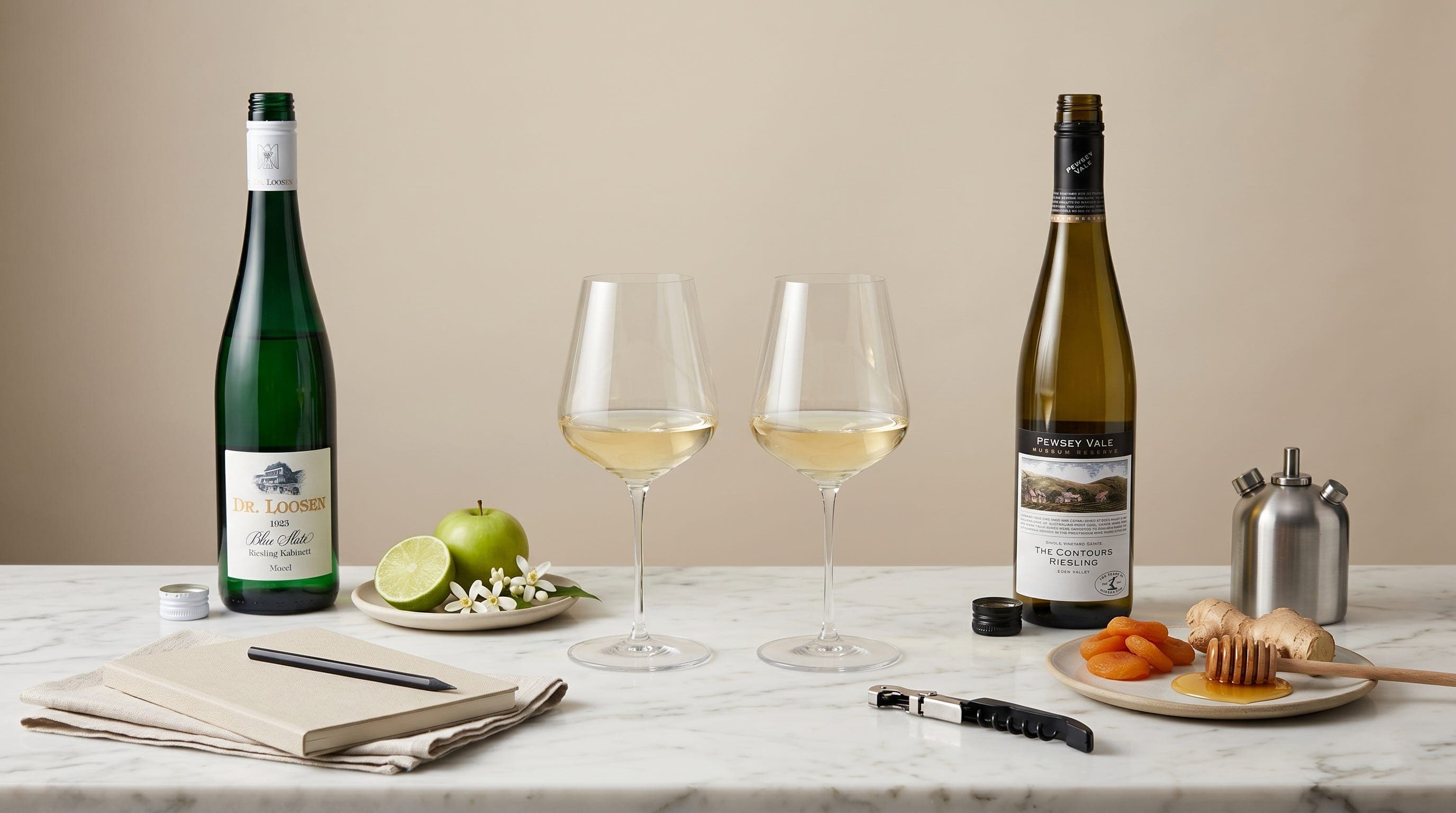
What to try: Riesling, young against deliberately aged. Young: Pewsey Vale Eden Valley Riesling, or Dr. Loosen “Blue Slate” Mosel, current vintage ($18 to $22). Aged on release: Pewsey Vale “The Contours,” which the winery holds back and ships with about five years of bottle age ($30 to $34). If aged Riesling is hard to find near you, the easiest substitute is a white Rioja that arrives already mature, like López de Heredia Viña Gravonia, set against any fresh young white (ideally another Rioja, like CVNE’s Monopole, or a Viura-based wine).
What to notice:
- The young wine: lime, green apple, white flowers, all primary and bright.
- The aged wine: honey, toast, dried apricot, and that distinct petrol note lifting off the top.
- The texture, how the older wine feels broader and rounder even though the grape and the ground never changed.
The lesson: Time is the third author. The petrol that scared me a decade ago is a marker of a Riesling that has aged well, a compound that builds slowly in the bottle. This is the thread most drinkers never learn to follow, because it asks you to wait. Smell it on purpose, side by side with the young version, and the source becomes obvious.
The Finish
Three threads: place, cellar, and years. The grape and its climate give you the first thread, the winemaking gives you the second, and time gives you the third. Most of the mystery in a glass comes from not knowing which thread a smell belongs to.
So here is the question worth sitting with this week. Which of the three do you actually reach for? Some people love the bright primary fruit of a young wine and find aged bottles strange. Others live for the toast and honey that only time provides. There is no correct answer, only yours, and noticing your own pull is the entire point.
Next bottle you open, before you swirl, take one slow sniff and ask where the smell came from: the grape, the cellar, or the years. You will be right more often than you expect, and every time you are, you are trusting your own nose a little more.
Go Deeper
If this week’s idea stuck with you, these take it further.
- Tim McKirdy, The Differences Between Primary, Secondary, and Tertiary Aromas, Explained (VinePair, 2019): A plain-English walk through the same three sources this issue is built on, grape, fermentation, and aging, with everyday examples and no jargon. The easiest place to start.
- Dr. Ann C. Noble, the Wine Aroma Wheel (UC Davis): The foundational tool for putting language to what you smell, built by the sensory scientist who changed how the wine world describes aroma.
- Wine & Spirit Education Trust, Level 3 Systematic Approach to Tasting (WSET): The actual grid professionals use to sort aromas into primary, secondary, and tertiary clusters, free as a PDF.
- Tarasov et al., TDN Sensory Thresholds in Riesling Wine (Foods, 2020): The chemistry behind that petrol note: the compound TDN, the concentration where your nose first catches it, and why a cooler pour makes it louder.